EERA DeepWind 2026: JP Wind at the heart of offshore wind R&I
Share this page
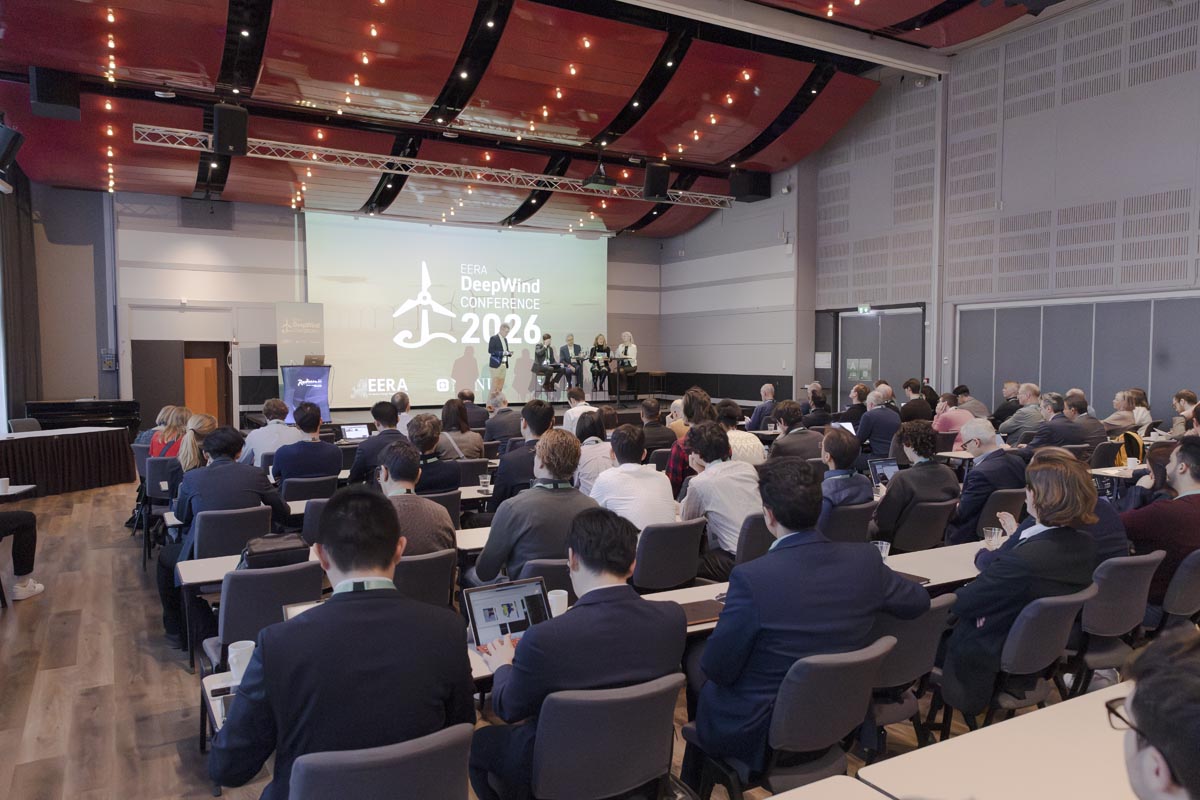
The 2026 edition of EERA DeepWind successfully brought together around 250 researchers and industry experts in Trondheim for three days of exchange on offshore wind research and innovation. Once again, the conference confirmed its role as a flagship event for the EERA Joint Programme Wind (JP Wind), highlighting its strong scientific leadership, its close links to industry, and its growing focus on system integration, sustainability and policy relevance.
Strong JP Wind leadership from the opening day
The conference opened under the chairmanship of Konstanze Kölle (SINTEF Energy Research), JP Wind Sub-Programme Coordinator on System Integration. From the outset, DeepWind 2026 set the tone for a research agenda closely aligned with European priorities, combining technological progress with system-level thinking.
JP Wind coordination was also strongly visible in the high-level panel discussion on “Offshore wind industry challenges and the way forward in Europe’s next framework programme”, moderated by Stephan Barth, JP Wind Coordinator. Participants were Davide Amato, EU Commission; Ignacio Martí, DTU and JP Wind Vice Coordinator; Marianne Haavardsholm Aandahl, Research Council of Norway; and Hanne Wigum, Equinor.
Sustainability, coexistence and societal impact in focus
Beyond technology, JP Wind’s growing emphasis on sustainability, circularity and societal aspects was clearly reflected in the programme. A dedicated contribution by Dorothy Dankel (SINTEF Ocean), JP Wind Sub-Programme Coordinator on Sustainability and Circularity, showcased how social-ecological frameworks can be integrated into offshore wind development to support coexistence with other marine uses and biodiversity.
Several sessions addressed environmental impact, marine spatial planning and public acceptance, illustrating how JP Wind research increasingly embeds offshore wind into its wider environmental and societal context. This systemic approach is becoming a defining feature of the programme.
From system integration to security of supply
System integration remained a central theme throughout the conference, from grid and market integration to offshore wind’s contribution to security of electricity supply. A dedicated session on this topic, organised in collaboration with European research initiatives, reflected the growing importance of offshore wind in future power systems and the need for robust, resilient grid solutions.
While the scientific programme covered a broad range of advanced topics, the overarching message was clear: offshore wind must be designed, operated and integrated as part of a complex, interconnected energy system. This is a core focus of JP Wind’s strategic research agenda.
Looking ahead: circularity, coexistence and innovation
The conference concluded with a strategic outlook session pointing towards the next phase of offshore wind development. Topics such as hybrid energy systems, energy storage, circular design and nature-inclusive approaches illustrated how JP Wind research is evolving to address long-term sustainability and scalability challenges.
The strong participation of JP Wind members throughout DeepWind 2026 reaffirmed the programme’s central role in shaping Europe’s offshore wind R&I landscape. By bridging disciplines, sectors and policy levels, JP Wind continues to turn cutting-edge research into actionable knowledge for the energy transition.
Login as an EERA member
In case you are an EERA member and don’t have login details, please contact a.schneider@eera-set.eu